Research Objectives
Research Objectives of the Dolphinfish Research Program
The DRP’s Updated Research Objectives
 Formed in 2002 by the South Carolina Department of Natural and Environmental Resources, the Dolphinfish Research Program (DRP) was designed to incorporate the public into a scientific study of the life history, movements, and population dynamics of the common dolphinfish (Coryphaena hippurus). Over the past 18 years of the DRP, many of the research objectives set forth at the onset of the study have remained the same. Below is a list of the DRP’s original research objectives set forth in 2002. These research objectives were focused on data collection within the South Atlantic Bight and along the U.S. East Coast.
- Identify spring and fall migration routes
- Document international range
- Identify recreational fishing grounds
- Define temporal and spatial occurrence
- Identify winter grounds for U.S. dolphinfish
- Collect data to define critical habitat
Now entering its 24th year of research, the DRP continues to work to complete these objectives along the U.S. East Coast but is now focused in working in other regions where these topics remain largely unknown. As progress towards completing these objectives is fundamental to the future direction of the DRP, in this month’s edition of our newsletter, we update the primary objectives of the DRP and describe strategies to continue to engage the public in order to fill knowledge gaps and advance our understanding of this species within a regional context.
Below is a table that provides the original scientific objectives of the Dolphinfish Research Program (DRP) and specific reference documenting evidence of science-based outcomes in scientific literature published using DRP data. In addition, the table provides the status of each research objective and specific priorities by topic and region necessary to fill knowledge gaps. The last row of the table details new objectives which consists of four major themes: (1) using DRP data to examine dolphin movement and occurrence dynamics within the Florida Straits; (2) increasing participation in the Gulf of Mexico and Mid-Atlantic Bight where a lack of participation has led to a lack of knowledge of dolphin behavior in those regions; (3) focusing research on moored fish aggregating devices in the Caribbean Sea; and (4) incorporating virtually all of our research objectives to our work based out of Tropic Star Lodge in southern Panama funded by the Guy Harvey Foundation. This table is the DRP’s research roadmap and guide and what is used on a daily basis to advance the program through public engagement and data collection. Ultimately, decades of research is needed in order to address and achieve these research objectives for dolphin. Our model has always

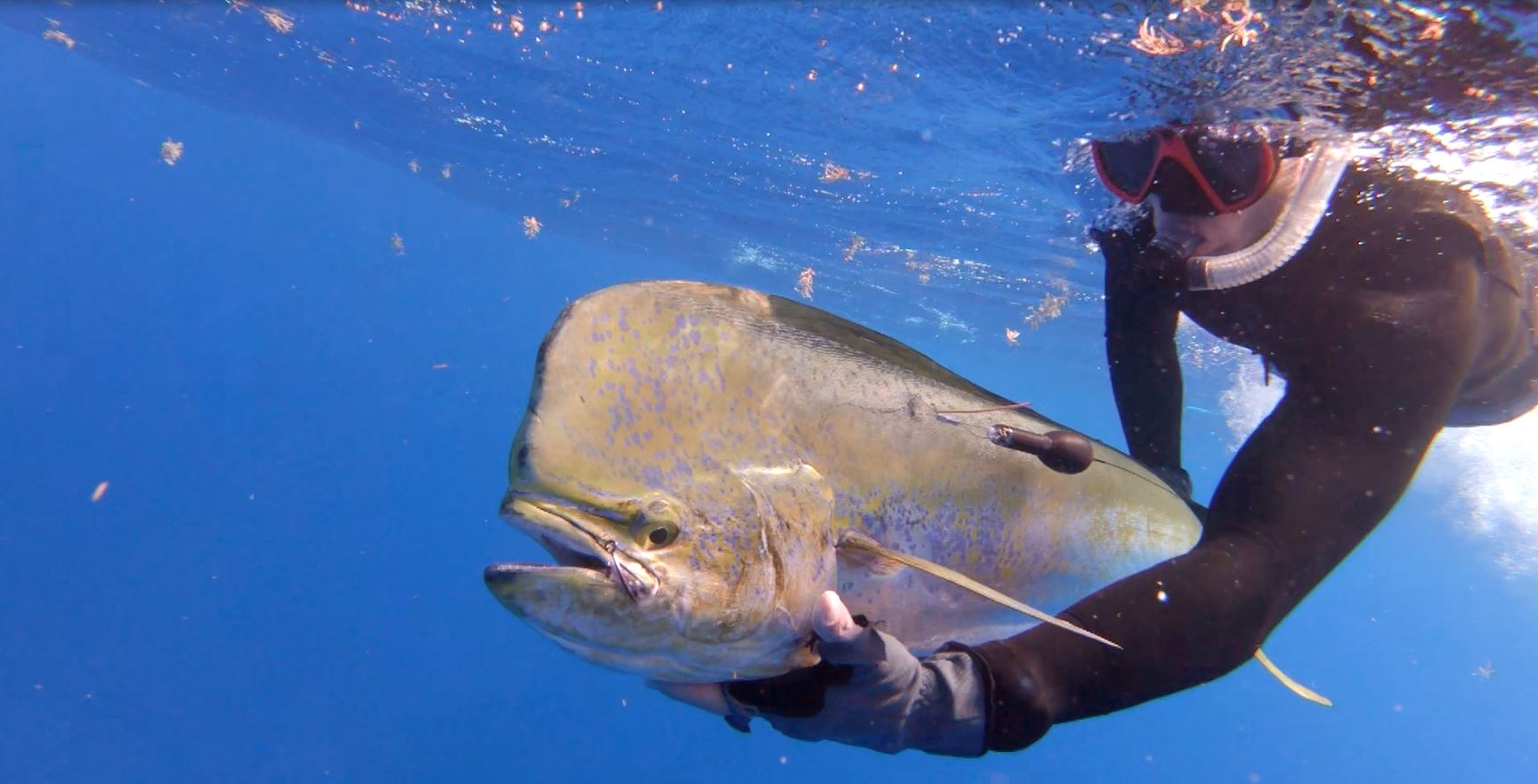
41″ bull tagged and released on 1.7.2025 out of Casa Vieja Lodge. The tag remained with this fish for 27 days.
been to directly engage the public in producing the outcomes. Over the past two years, new tools have been used to increase participation and, ultimately, data collection in order to advance our progress toward achieving these objectives. Over the first 16 years of the program (2002-2017), when managed by the South Carolina Department of Natural Resources (2002-2005) and by Don Hammond (2006-2017), sophisticated email marketing platforms and social media were not utilized to engage the public in knowledge of the existence of the DRP and DRP objectives. In 2017, we created a new organizational framework, improved marketing tactics, and enhanced database management techniques with the principle objective of increasing participation and data collection in order to achieve progress towards addressing the DRP’s research objectives. In 2018 and 2019, the DRP had its 2nd and 3rd highest amounts of annual participation and tagging activity, which ultimately led to a surge in new results. While this marks great progress, the DRP still lacks participation in the Gulf of Mexico (GOM) and the Mid-Atlantic Bight (MAB), an issue we are working to address. In the MAB, despite dolphin being the 2nd most targeted highly migratory species behind bluefin tuna, since 2002, there have only be 348 dolphin tagged and released in the region. Due to the lack of tagging data, there is virtually no quantitative information on residency patterns, horizontal and vertical movements, and connections with the eastern Atlantic, Caribbean Sea, or South Atlantic Bight. This data is necessary to address many of the research objectives outlined above. Now that the DRP is headquartered in Newport, Rhode Island, over the next several years, the DRP is focused on involving more captains and vessels involved in data collection on dolphin in this region.
Wherever you call homeport, we aspire to work with you to increase data collection on dolphin. In doing so, you will contribute to the largest collective public effort to advance our knowledge of dolphin on a regional basis with results applied to a host of specific research objectives. You can and will make a difference by tagging dolphin in the DRP. Request tags at dolphintagging.com/tags

 Formed in 2002 by the South Carolina Department of Natural and Environmental Resources, the Dolphinfish Research Program (DRP) was designed to incorporate the public into a scientific study of the life history, movements, and population dynamics of the common dolphinfish (Coryphaena hippurus). Over the past 18 years of the DRP, many of the research objectives set forth at the onset of the study have remained the same. Below is a list of the DRP’s original research objectives set forth in 2002. These research objectives were focused on data collection within the South Atlantic Bight and along the U.S. East Coast.
